
Welcome to 2026. After a multi-year period of resets, price discovery, and volatility, the housing market is entering a new, more sober-minded phase. The era of easy money and passive, market-driven appreciation is firmly behind us.
In 2026, success will be defined not by chasing the hottest “it” city, but by understanding the deep, structural fundamentals that drive demand.
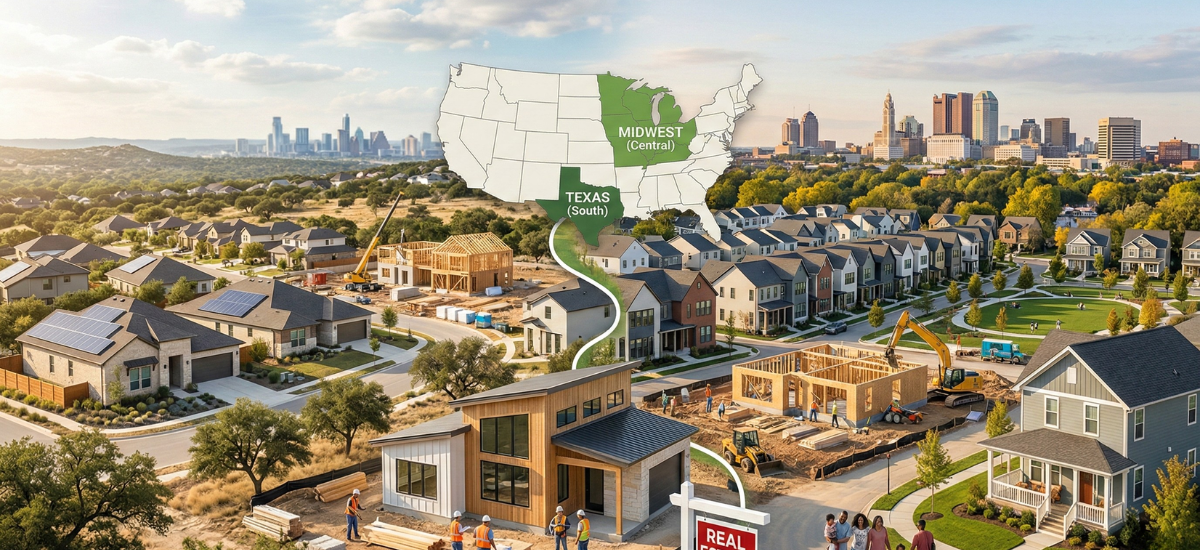
At TerraNova Alliance, our long-term vision is focused on the asset classes and regions that provide stability, affordability, and resilience. This year, all signs point to the “missing middle”—workforce housing. We’re keeping a particularly close eye on two of our core regions: the high-growth corridors of Texas and the stable, “new-growth” hubs of the Midwest.
Here are the three major trends shaping our investment thesis for the year ahead.
1. Housing Trend: The “Higher-for-Longer” Effect: A Nation of “Renters-by-Necessity”
For the past two years, the market has waited for interest rates to return to their pre-2022 lows. It is now clear that the 6.0% – 6.5% mortgage rate is not a temporary spike; it’s the new normal.
This has fundamentally broken the “rent vs. buy” equation for a generation.
The monthly cost of owning a starter home (factoring in principal, interest, taxes, and insurance) is now 30-50% higher than the average rent for a quality apartment in most major markets.
The result is the proliferation of the “renter-by-necessity.” This is no longer just a young, transient demographic. This group now includes dual-income families, established professionals, and empty-nesters who are able to buy but choose not to, as it is no longer financially prudent.
Our Outlook: This is the single most powerful tailwind for the workforce housing sector. This demographic is non-discretionary. They are not choosing between a Class A luxury unit and a home purchase; they are seeking the best-in-class, most affordable, and most stable housing option available. This creates a deep, durable, and reliable tenant base—the very definition of a resilient investment.
2. Housing Trend: Migration’s New Filter: The Search for “Affordability at Scale”
The pandemic-era migration was about “finding space.” The 2026 migration is about “finding affordability.” This shift is reshaping our target markets.
- In Texas: The story is no longer just “move to Austin.” The first wave of corporate relocations and tech migration drove prices in cities like Austin and parts of Dallas to coastal levels. Now, we’re watching the second wave: the “flight to affordability” within Texas. We see tremendous opportunity in markets like San Antonio and Houston, as well as the immediate suburbs of Dallas-Fort Worth, where job growth remains robust but the cost of living is more tenable.
- In the Midwest: This is the region’s moment. For decades, the narrative was “brain drain.” Today, it’s “brain gain.” Markets like Columbus, Indianapolis, and Kansas City are now attracting capital and people at an accelerating rate. They offer something the coasts and even the hotter Sun Belt markets can no longer provide: a high quality of life and a low cost of living, powered by massive, stable employment anchors in “eds and meds” (education and healthcare), logistics, and advanced manufacturing.
Our Outlook: The demographic tailwinds are undeniable. We are positioning our investments to capture this “second wave”—targeting assets in the path of affordable growth in Texas and in the core, stable markets of the Midwest that are becoming the new standard for livability.
3. housing trend: The End of Passive Returns: A “Flight to Quality” in Operations
For the better part of a decade, cap rate compression (the rise in an asset’s price relative to its income) made nearly every multifamily investor look like a genius. Simply buying an asset and holding it was a profitable strategy.
That is no longer the case.
In a “higher-for-longer” rate environment, you can no longer rely on the market to create your returns. You must manufacture your own “alpha” (outperformance).
Value in 2026 will be created—or lost—at the property level. It’s about who can best manage expenses. Who can implement the right technology to reduce turnover. Who can execute a smart, targeted value-add plan that increases revenue without pricing out the resident base.
Our Outlook: This new era is a “flight to quality”—not just in assets, but in operators. It favors disciplined, experienced firms (like TerraNova Alliance) that have a proven playbook for operational efficiency, asset preservation, and strategic capital improvements. This is where our expertise becomes our greatest competitive advantage.
Our Vision for 2026
These three housing trends—a new generation of renters-by-necessity, a migration wave driven by affordability, and a market that rewards operational expertise—all point to the same conclusion.
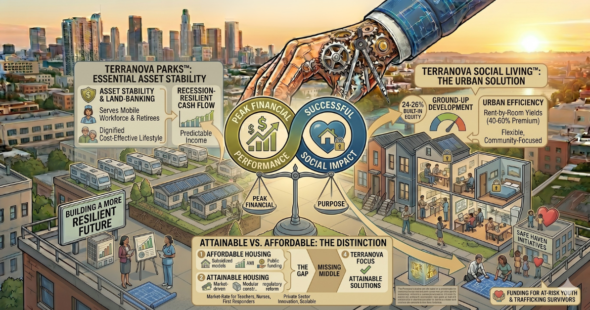
The most compelling, risk-adjusted opportunity in real estate today is not in high-risk, high-rent luxury development. It is in the acquisition, improvement, and preservation of quality workforce housing in the most resilient markets in the country. That is the TerraNova Alliance playbook, and it’s why we are more confident in our mission than ever before.