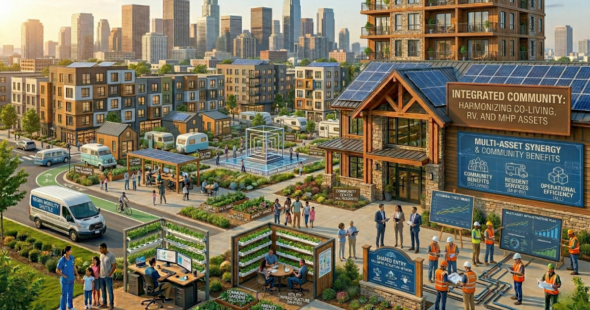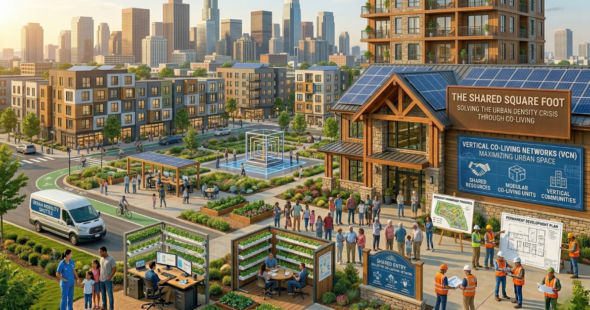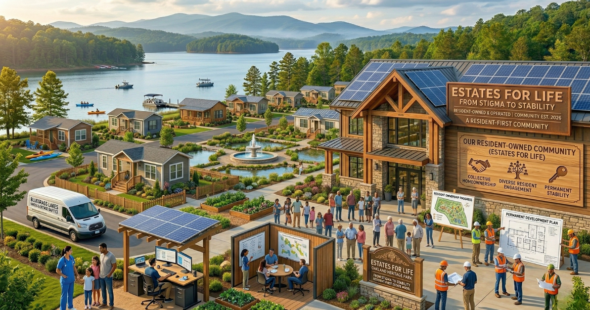

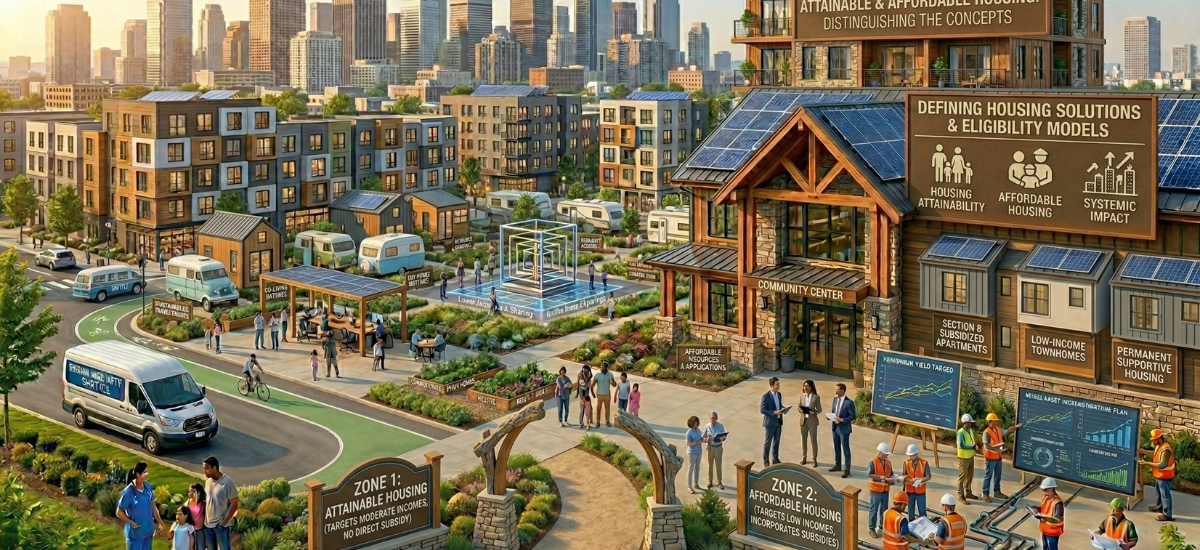
For decades, the term “affordable housing” has been the centerpiece of conversations around real estate and social policy. However, as the housing crisis deepens, a more nuanced and forward-looking concept—attainable housing—has emerged as a necessary focus for the real estate sector. The two terms are often used interchangeably, but understanding their fundamental differences is vital for creating effective, market-based solutions.
Affordable Housing: Policy-Driven and Income-Focused
Affordable Housing is primarily a policy and subsidy-driven concept.
- Definition: Housing is considered “affordable” when a household pays no more than 30% of its gross income for all housing costs, including utilities. This standard is set by the U.S. Department of Housing and Urban Development (HUD).
- Focus: It is tied directly to Area Median Income (AMI) and often requires governmental subsidies, tax credits, or specific financing structures to bridge the gap between market costs and what a low-to-moderate-income household can reasonably afford.
- Goal: To provide safe, decent housing to the most vulnerable populations who cannot compete in the open market.
While critical for low-income residents, the term “affordable housing” often carries a stigma and can face significant opposition during development, frequently resulting in a focus on meeting minimum standards rather than fostering vibrant, integrated communities.
Attainable Housing: Market-Based and Supply-Driven
Attainable Housing shifts the focus from government subsidies to private sector innovation and market efficiency.
- Definition: Attainable housing is market-rate housing that is accessible to the working-class and middle-income population—essential workers like teachers, nurses, firefighters, and entry-level professionals—who earn too much to qualify for traditional affordable housing programs but are priced out of the current median-priced homes.
- Focus: It is achieved by addressing the core drivers of high housing costs, such as:
- Cost of Construction: Utilizing more efficient construction methods, such as modular or prefabricated homes, and innovative materials.
- Regulatory Burden: Advocating for streamlined permitting processes and sensible zoning reforms that allow for increased density and diverse housing types (e.g., duplexes, townhomes, Accessory Dwelling Units or ADUs).
- Efficient Design: Developing smaller, more thoughtful units and housing types that reduce per-unit development costs while maintaining high quality of life.
- Goal: To increase the overall supply of diverse housing options at price points accessible to the broad spectrum of the local workforce without relying on perpetual public funding.
The Key Difference: Approach to the Problem
The fundamental difference lies in the approach to solving the housing crisis:
| Feature | Affordable Housing | Attainable Housing |
| Primary Mechanism | Government subsidies and policy. | Private sector innovation and regulatory reform. |
| Target Population | Low-to-moderate income households (based on AMI). | Working-class and middle-income workforce. |
| Price Determination | Fixed by income limits and government formulas. | Driven by reduced production costs and market efficiency. |
| Focus | Bridging the financial gap for the most needy. | Increasing the supply and diversity of housing stock. |
For Terranova Alliance, embracing the concept of attainable housing is essential. While continuing to support affordable housing initiatives, focusing on attainability mobilizes the private sector to bring market-driven, scalable solutions to the housing supply shortage, offering a path to sustainable homeownership and rental security for the backbone of our communities.