
In an era defined by economic turbulence and shifting market priorities, the mission of the TerraNova Alliance—to create a unified approach to housing and hope through affordability—is more critical than ever. As traditional investment sectors feel the strain of volatility, a clear-eyed look at the real estate market reveals a foundational truth: essential housing for our workforce is not just a social good; it is demonstrably the most resilient and stable investment in the current economic climate.
Navigating the Economic Headwinds
The economic environment of the mid-2020s is marked by persistent inflation, elevated interest rates, and a palpable sense of market uncertainty. These factors have fundamentally reshaped the real estate landscape. Investors who once chased high-margin, speculative projects are now prioritizing assets that can weather a downturn. It is precisely in this context that the fragility of both luxury developments and commercial office space is exposed, while the underlying strength of essential housing is affirmed.
Commercial real estate, particularly the office sector, has been severely impacted by the structural shift to hybrid and remote work. Vacancy rates in major metropolitan areas are soaring, debt is maturing, and the necessity of massive physical footprints is being questioned. This is compounded by rising financing costs, creating a perfect storm for commercial property owners facing significant capital expenditure to re-tenant or reconfigure their spaces. The risk profile here has fundamentally changed from a reliable income generator to a speculative liability.
Similarly, the luxury housing market, while seemingly insulated by high net worth individuals, is highly sensitive to changes in economic sentiment and capital gains. A dip in the stock market or a tightening of credit can quickly deflate demand, leading to price corrections and prolonged sales cycles. This segment is characterized by discretionary demand—a need that is easily deferred when financial forecasts darken.
The Unshakeable Foundation of Essential Housing
In stark contrast, essential housing for workers—the foundation of every functional community—operates on a principle of non-discretionary, constant demand. The need for a stable, affordable place to live is inelastic; it is not a luxury that can be put off, but a necessity for participation in the economy. This inherent demand creates a powerful stabilizing effect that luxury and commercial sectors simply cannot match.
1. Reliable Occupancy and Income: Affordable and workforce housing typically maintains robust occupancy rates regardless of the economic cycle. While job losses can impact certain demographics, the underlying cohort of essential workers—healthcare providers, educators, public safety personnel, service industry employees—requires a predictable place to live. This continuous demand translates directly into stable, reliable rental income streams, which are paramount to investor confidence.
2. Counter-Cyclical Strength: When the economy slows, there is a natural ‘trading down’ effect. Individuals and families who may have aspired to market-rate or luxury rentals often find themselves seeking more budget-conscious options, further bolstering the demand and occupancy of affordable housing. This counter-cyclical behavior acts as a crucial buffer against recessionary pressures.
3. Government and Community Support: The stability of affordable housing is further cemented by its mission-driven nature and the support it often receives from local, state, and federal programs. Tax credits, subsidies, and public-private partnerships provide layers of insulation from market volatility that are simply unavailable to purely speculative ventures. This financial scaffolding is designed to ensure the housing remains viable and affordable over the long term, making it an inherently lower-risk asset class.A Unified Vision for Stability
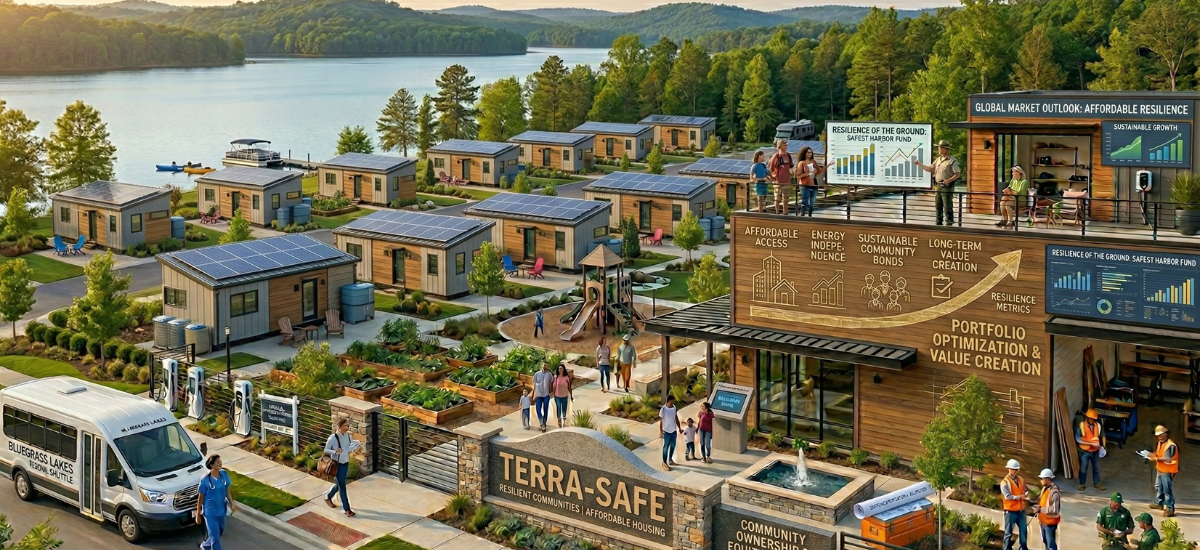
For the TerraNova Alliance, investing in essential housing is a dual victory: a commitment to social impact and a strategy for enduring financial security. The stability found in the ground—in the brick and mortar that shelters the working backbone of our society—is the true ‘safest harbor’ of 2026.
By prioritizing essential housing, we shift the investment focus from fleeting profit to sustained purpose. We invest in the human capital of our communities, ensuring that the critical workers who keep our society running have a foundation of housing and hope. This unified approach not only stabilizes balance sheets but also stabilizes communities, creating a resilient, equitable, and ultimately more prosperous future for everyone. Essential housing is not just about affordability; it’s about providing the structural integrity for a unified future, making it the smartest, safest harbor in today’s turbulent economy.