
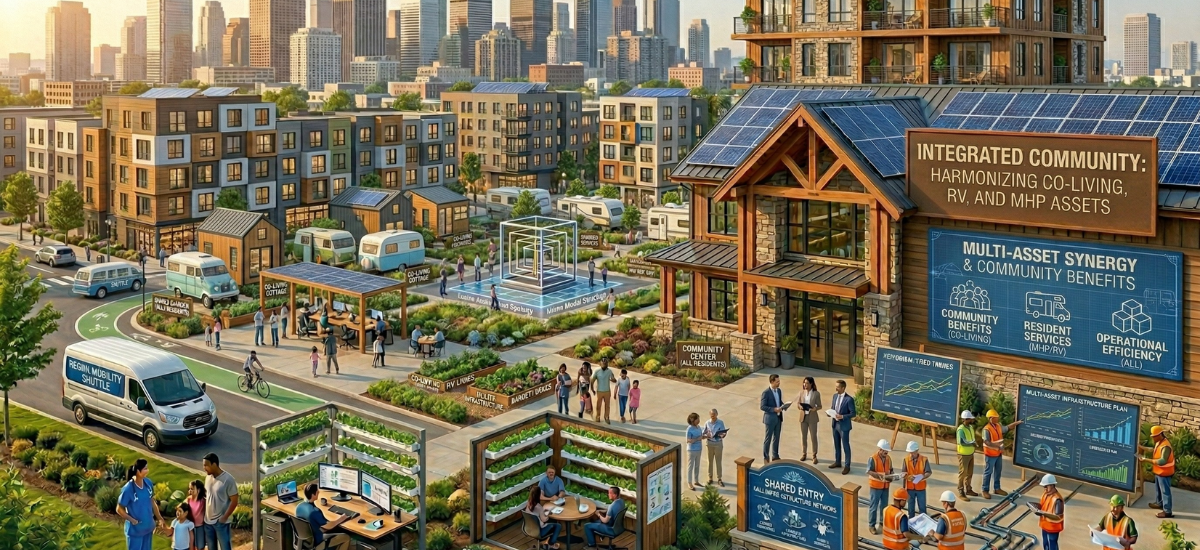
The escalating affordable housing crisis in the United States presents a dual challenge and opportunity for discerning capital partners. At the TerraNova Alliance, we view this challenge not as a constraint but as a fertile ground for value creation through a unified housing approach. This strategy moves beyond the confines of traditional multi-family housing (MFH) to focus on three high-potential, underserved niche asset classes: Recreational Vehicle (RV) Parks, Manufactured Housing Parks (MHP), and Co-Living facilities. For our capital partners, these assets offer a compelling blend of high, often counter-cyclical, returns and profound social impact.
The Opportunity Thesis: Stability in Niche Housing
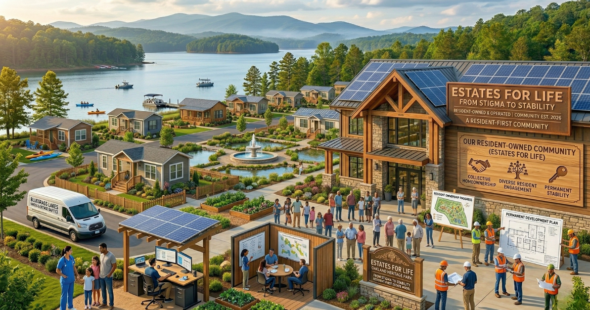
The enduring appeal of Manufactured Housing Parks (MHP) lies in their fundamental operational stability. MHP opportunities are often characterized by land ownership combined with tenant-owned homes. This unique structure shifts the bulk of capital expenditure (CapEx) for home maintenance onto the resident, resulting in significantly lower operating expenses for the park owner. This cost efficiency allows MHPs to generate remarkably stable, recession-resistant cash flows. Furthermore, the high cost and difficulty of developing new parks create a supply constraint, driving up the value of existing assets and insulating them from the volatility seen in other real estate sectors.
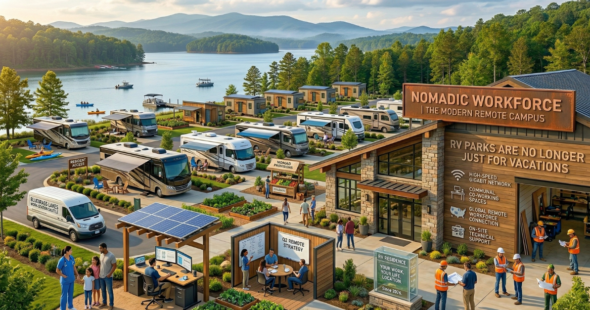
RV Parks, once considered highly specialized, have emerged as a powerful investment vehicle. They cater to a broad demographic, from retirees to remote workers, seeking affordable, flexible living. The operational model is akin to a hospitality business, allowing for dynamic pricing and shorter lease terms, which provides an efficient inflation hedge. As with MHPs, the scarcity of new entitlements and high barriers to entry ensure that well-located RV parks maintain a strong competitive advantage and high occupancy rates, forming a bedrock of stable returns for our capital partners.
Co-Living: The Urban Density Solution
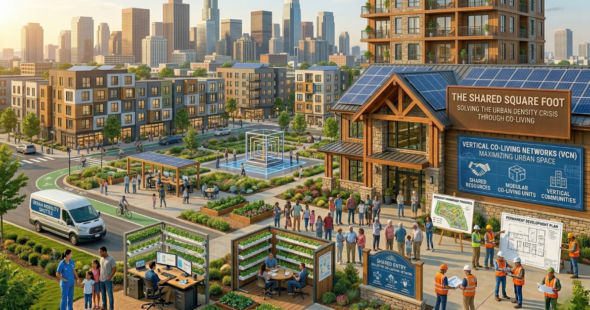
Co-Living represents the innovative urban solution to the affordability challenge. By maximizing space efficiency through shared common areas and compact private units, Co-Living operators can offer lower price points to residents than comparable traditional apartments. This model captures high demand from young professionals and students in expensive urban centers, resulting in superior income per square foot. The streamlined operations, which often include utility and service bundles, generate high gross potential income. For capital partners, Co-Living offers an opportunity to realize higher net operating income (NOI) through a focus on management efficiency and scale, directly addressing the need for entry-level housing in major metros.
Yield Profile: Niche Assets vs. Multi-Family Housing
When comparing the investment profile of these niche assets against traditional Multi-Family Housing (MFH), the differential in yield potential is clear. In most primary and secondary markets, the cap rates for stabilized, Class A and B MFH have been substantially compressed due to high institutional demand, leaving little room for immediate value creation. The market is mature, and while stable, the path to outsized returns is limited.
In contrast, RV, MHP, and Co-Living assets, particularly those with opportunities for operational optimization or expansion, generally present capital partners with a more attractive entry point. These assets often trade at a discount compared to MFH on a per-unit basis, offering a higher initial yield that compensates for the perceived—and often overestimated—management complexity. The “value-add” component in these niches is substantial, ranging from modernizing park amenities in MHPs and RV parks to implementing advanced revenue management systems in Co-Living spaces. This investment dynamic allows the TerraNova Alliance to drive NOI growth and benefit from meaningful cap rate compression as we stabilize and institutionalize the operations of these assets.
Exit Strategy and Long-Term Value
The exit strategy for our portfolio is anchored in the accelerating institutionalization of the niche housing sector. Just a decade ago, these assets were fragmented and primarily held by private or local operators. Today, major institutional funds and publicly traded REITs are aggressively entering the market, recognizing the superior, defensive cash flow profiles of MHP and RV parks. This growing pool of institutional buyers provides an increasingly liquid exit for high-quality, stabilized assets.
For Co-Living, the exit is often tied to a consolidation play in urban markets, where a portfolio of well-managed assets appeals to large-scale, international real estate platforms seeking instant market share and density. Unlike MFH, where the buyer pool is already saturated, the niches offer a clear path to premium valuation upon disposition as institutional demand continues to outpace available supply.
Partnering with the TerraNova Alliance means investing in a thesis that achieves both robust financial returns and a measurable social impact. By targeting the high-yield niches of RV, MHP, and Co-Living, we are offering capital partners a differentiated strategy that addresses the affordable housing crisis while delivering superior, risk-adjusted performance compared to the crowded traditional MFH market. We invite you to join us in shaping the future of accessible housing in the U.S.