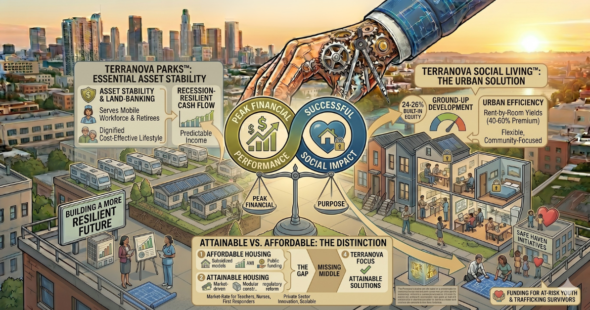


The investment landscape is often dominated by talk of traditional multifamily properties, commercial real estate, and single-family rentals. Yet, a quiet revolution is happening in the world of affordable housing, specifically within RV parks and manufactured home communities (MHCs). These properties, when positioned as long-term residential solutions, offer a financial profile that is highly attractive and often superior to traditional real estate assets.
This isn’t about seasonal tourism; it’s about providing essential, long-term affordable housing. Let’s dive into the core financial metrics that make this asset class a powerhouse investment.
The Power of High Cap Rates and Low Operational Overhead
The most compelling financial argument for RV parks and MHCs is the combination of high capitalization rates (Cap Rates) and low operational overhead.
1. Outsized Cap Rates
Cap Rate is a metric used to estimate an investor’s potential return on investment (ROI). It’s calculated by dividing the property’s Net Operating Income (NOI) by its purchase price.
Cap Rate=Property ValueNOI
RV parks and MHCs consistently trade at higher Cap Rates than comparable Class B or C multifamily apartment complexes. This is due to a perceived—though often unwarranted—risk or simply a lack of broad market adoption. Where an apartment complex might sell for a 4% to 6% Cap Rate, a stabilized, well-managed RV park community might command a 7% to 10% Cap Rate. This disparity translates directly to a greater immediate return on investment for the buyer.
2. Lean Operating Costs: The Land-Lease Model
The secret to the high NOI in these communities lies in the fundamental business model: the land-lease model.
- Residents Own the Home, You Own the Land: Unlike apartment buildings where the owner is responsible for every roof, appliance, and unit interior, in a residential RV/MHC park, residents typically own the RV or mobile home structure itself.
- Significantly Lower Operational Overhead: This distinction dramatically shifts the expense burden. The park owner is primarily responsible for the infrastructure (roads, utility hookups, community amenities, etc.) and the land. The massive expenses associated with individual unit maintenance, capital expenditures (like replacing HVAC units or roofs), and turnover costs are largely eliminated. This lean structure keeps expenses low and boosts the NOI, which is the key driver of asset value.
Predictable Cash Flow and Superior Returns
Investing is fundamentally about generating predictable, long-term income. This is another area where affordable housing RV parks shine, particularly when analyzing the Internal Rate of Return (IRR).
1. Long-Term, Predictable Cash Flow
The stable nature of affordable housing tenants leads to incredibly low turnover rates—often far lower than traditional apartments. When people move their homes (RV or manufactured), it’s a significant financial and logistical undertaking, making them highly motivated to stay. This translates to:
- Stable Occupancy: Consistent rent collection month after month.
- Reliable Rent Increases: Rents can be increased annually, tied to local market demand and inflation, providing a predictable growth trajectory for the NOI.
2. Strong Internal Rate of Return (IRR)
IRR is a sophisticated metric that estimates the total return on a property over its entire holding period, accounting for both cash flow and eventual sale proceeds. The combination of high immediate cash flow (due to the Cap Rate) and value appreciation (due to NOI growth) leads to a powerful IRR. Investors in this sector frequently target and achieve IRRs that outperform many comparable traditional real estate investments.
Simplicity, Appreciation, and Opportunity
Beyond the core metrics, RV park ownership offers practical advantages that simplify the investment process and enhance long-term value.
1. Simplicity Compared to Multifamily
Park ownership is logistically simpler than traditional apartment ownership. You’re managing a community and infrastructure, not hundreds of individual residential units. There’s less complex maintenance and far fewer calls about a broken dishwasher or a leaky faucet. This streamlined management structure makes it easier to scale a portfolio.
2. Land and Infrastructure Appreciation
While the homes themselves are owned by the residents, the underlying land and infrastructure are valuable assets that appreciate. As you improve roads, update utilities, and bring in higher-quality residents, you are adding value to the land. When this value increase is combined with the growth of rental income (which boosts the NOI), the asset’s overall market value can increase significantly over a typical holding period.
The financial case for affordable housing RV parks is clear: they offer high cash-on-cash returns, low operational risk, and a high ceiling for long-term appreciation. As the national housing shortage continues, this asset class stands out as a smart, strategic, and socially responsible way to deploy capital.