

For decades, the “trophy asset” in multifamily investing has been the Class A luxury high-rise. Gleaming with new amenities, commanding the highest rents, and drawing headlines, these properties have long been the symbol of success in real estate.
But in today’s environment of market uncertainty, rising interest rates, and economic headwinds, smart investors are looking beyond the glamour. They are asking a more critical question: Which asset class provides the best risk-adjusted return?
When the metrics shift from “glamour” to “resilience,” the investment thesis changes. The high-volatility world of luxury properties begins to look fragile, while the steady, non-discretionary demand for workforce housing emerges as a powerful defensive play.
It’s time to look beyond Class A and make the case for stability.
The Myth of Class A “Security”
On the surface, Class A properties seem secure. They have the highest-income tenants, so what’s the risk? As it turns out, that top-tier position is precisely what creates the volatility.
- The “Concessions Race”: The luxury market is defined by a constant pipeline of new, competing supply. To attract tenants, Class A properties are forced into a “concessions race”—offering two months of free rent, waiving fees, or providing expensive gift cards. These concessions are a direct hit to your pro forma and erode Net Operating Income (NOI).
- High Tenant Turnover: The Class A tenant is often a renter by choice, not necessity. They are highly mobile, with the financial freedom to move to the next new building with better amenities or to jump into homeownership when it suits them. This high turnover means higher vacancy loss, marketing costs, and make-ready expenses.
- Economic Sensitivity: Luxury rents are tethered to the highest-paying jobs in sectors like tech and finance. When the economy tightens, bonuses are cut, or layoffs occur, these tenants are the first to cut back on “luxury” rent, moving to more affordable (Class B) options or doubling up.
In short, the Class A market is a discretionary-spend market. It’s competitive, expensive to maintain, and the first to feel the pinch in a downturn.
The Unshakeable Demand for Workforce Housing
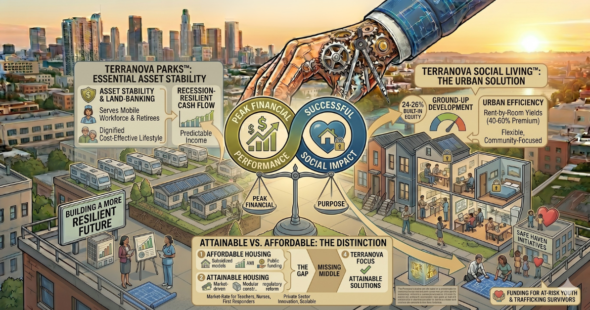
Now, contrast this with workforce housing. This asset class, which TerraNova Alliance is deeply committed to, serves the “missing middle”—households typically earning between 60% and 120% of the Area Median Income (AMI).
These are not low-income residents; they are the nurses, teachers, first responders, and skilled tradespeople who form the backbone of every functional economy. Their demand for housing is not a luxury; it is a necessity.
This creates a fundamentally different, and superior, investment dynamic.
- Structural Undersupply: Due to high construction and land costs, it is virtually impossible to build new properties that are naturally affordable to the workforce demographic without subsidies. This means workforce housing is almost completely insulated from the new-supply “concessions race” that plagues the Class A market.
- Low Turnover and “Stickiness”: Workforce tenants are not chasing the newest amenities. They are looking for a safe, clean, and well-located community to call home, often for the long term. They are rooted by their jobs, their children’s schools, and their communities. This “stickiness” results in significantly lower turnover, which translates directly to more stable cash flow and lower operating expenses.
- Massive, Non-Discretionary Demand: The demand for workforce housing is not optional. This creates an enormous, structural imbalance where demand far outstrips supply in nearly every major market. This imbalance provides a powerful floor for occupancy and rent growth.
The Defensive Play: Why Stability Wins in a Downturn
Here is the most critical point for investors seeking resilience: Workforce housing is a defensive, counter-cyclical asset.
In an economic downturn, it captures demand from both directions:
- Demand from Above: Class A tenants facing financial pressure “rent down” to more affordable, high-quality Class B/workforce properties to save money.
- Demand from Below: Tenants in older, Class C properties seek the stability, safety, and professional management of workforce housing.
While luxury assets see vacancies spike, workforce housing often experiences strengthening occupancy. Its revenue stream is not dependent on a booming economy; it’s dependent on the essential, everyday functions of a community.
The TerraNova Alliance Thesis: Swapping Volatility for Durability
Investing in Class A is often a bet on timing the market. Investing in workforce housing is a bet on the durability of the market.
At TerraNova Alliance, we believe the smartest capital seeks consistency. The workforce housing sector offers what every investor should be looking for in a core asset: predictable cash flow, insulation from new supply, lower operational volatility, and profound recession resilience.
It may not be the shiniest asset in the portfolio, but it’s the one that provides the stable foundation. In this market, a “sleep-well-at-night” investment isn’t just a bonus—it’s the entire strategy.