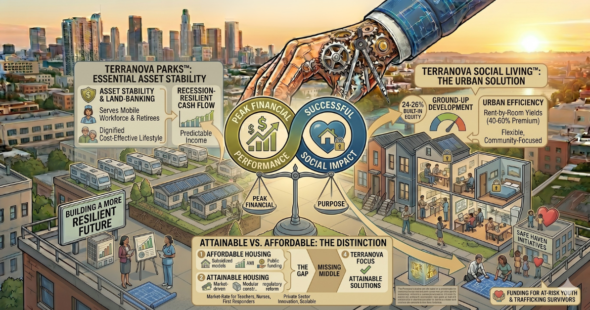


Texas has long been a magnet for growth, driven by a powerful trifecta of population influx, industry expansion, and a business-friendly environment. However, this explosive growth has created a significant challenge: a severe housing shortage that is pricing out a crucial segment of the population—the workforce. This is why “workforce housing,” defined as housing for households earning between 60% and 120% of the area median income, represents the next great real estate investment opportunity in the Lone Star State.
The Data-Driven Case for Texas: A State on the Rise
The investment potential in workforce housing is not based on speculation, but on a confluence of verifiable trends.
1. Unprecedented Population Growth: Texas’s population is booming. From April 2020 to July 2023, the state’s population grew by 4.7%, reaching 30.5 million people. This growth is heavily concentrated in the major metropolitan areas, particularly the “Texas Triangle” formed by Dallas-Fort Worth, Austin, San Antonio, and Houston. The state continues to lead the nation in population growth, with a 1.83% increase from 2023 to 2024, reaching a population of over 31 million. This constant influx of new residents creates a fundamental and enduring demand for housing.
2. A Diversified and Expanding Economy: Texas’s economy is no longer solely reliant on oil and gas. While the state remains a leader in traditional energy, it has also become a powerhouse in renewable energy and technology.
- Energy: Texas leads the nation in both oil and natural gas production, and it has also been the top state for wind energy for over 17 years. The state’s investment in solar power has also grown rapidly, with cumulative capacity reaching 14,818 MW in 2022. This expansion creates a consistent demand for skilled and unskilled workers.
- Technology: Austin, nicknamed “Silicon Hills,” has become a major tech hub, attracting a wide range of companies and startups. The Dallas-Fort Worth area is also a rapidly growing tech scene. Companies are relocating to Texas in record numbers, drawn by the state’s business-friendly policies, no state income tax, and a deep talent pool.
3. The Growing Housing Deficit: Despite being the national leader in homebuilding, Texas has been unable to keep pace with demand. A 2023 analysis by Up for Growth estimated that Texas was short by over 300,000 homes in 2021, and this deficit has only grown. The shortage is most acute for middle-income buyers, who are being priced out of the market.
- Affordability Crisis: Between 2019 and 2023, the median home price in Texas rose by 40%, while affordability for a median-income family plummeted. In 2023, a median-income family was just 7% above the necessary income needed to purchase a median-priced home, down from 62% in 2019. In some metro areas like Brownsville, McAllen, and El Paso, the median family could no longer afford a median-priced home.
- Strained Rental Market: The housing shortage has also impacted the rental market. In Fort Worth, for example, 34% of the population earns less than $50,000, but a household needs to earn over $55,000 to afford the median rent for a two-bedroom apartment. This puts a significant portion of the workforce under a “cost-burdened” housing situation, where they pay more than 30% of their income on housing.
The Investment Opportunity
The growing gap between what the Texas workforce earns and what housing costs is creating a strong, stable, and long-term investment opportunity. Workforce housing, which targets this demographic, offers several key advantages:
- Stable Demand: The industries fueling Texas’s growth—from energy and manufacturing to healthcare and technology—are creating thousands of jobs for individuals who need affordable housing. This is a consistent and reliable source of demand, regardless of broader market fluctuations.
- Counter-Cyclical Resilience: Unlike high-end real estate, which can be sensitive to economic downturns, demand for workforce housing remains strong. In a downturn, people may postpone buying a luxury home, but the need for a place to live for essential workers does not diminish.
- Favorable Policy Environment: The housing crisis is a recognized problem, and policymakers are increasingly looking for solutions to increase supply and streamline regulations. This creates a more favorable environment for developers and investors focused on this sector.
In conclusion, Texas’s remarkable economic and demographic growth has created a foundational need for workforce housing. As the state continues to attract new people and businesses, the housing deficit for middle-income earners will only widen, making investments in this sector a strategic, long-term play with strong returns and a positive social impact. For savvy real estate investors, the untapped potential of Texas’s workforce housing market is simply too significant to ignore.