Identifying High-Potential Mobile Home Communities
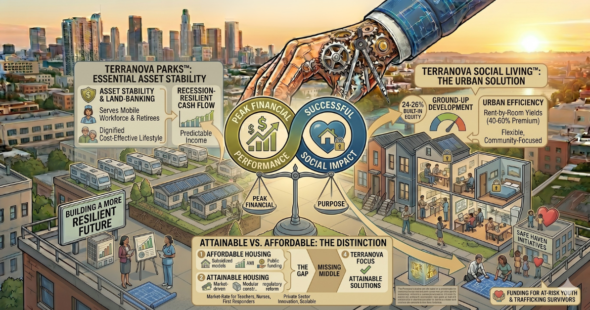
The American affordable housing landscape is currently defined by a critical “missing middle”—a vast population of hardworking individuals, such as teachers, first responders, and service workers, who earn too much to qualify for government subsidies but too little to afford market-rate apartments. At TerraNova Alliance, we address this void by professionalizing and rebranding often-stigmatized assets like manufactured home communities (MHCs) into resilient, income-generating “Resident-First Estates”. Identifying a high-potential deal requires more than just looking at a balance sheet; it requires a disciplined framework to see how neglect can be transformed into stability.
The TerraNova “Buy Box”: What Makes a High-Potential Deal?
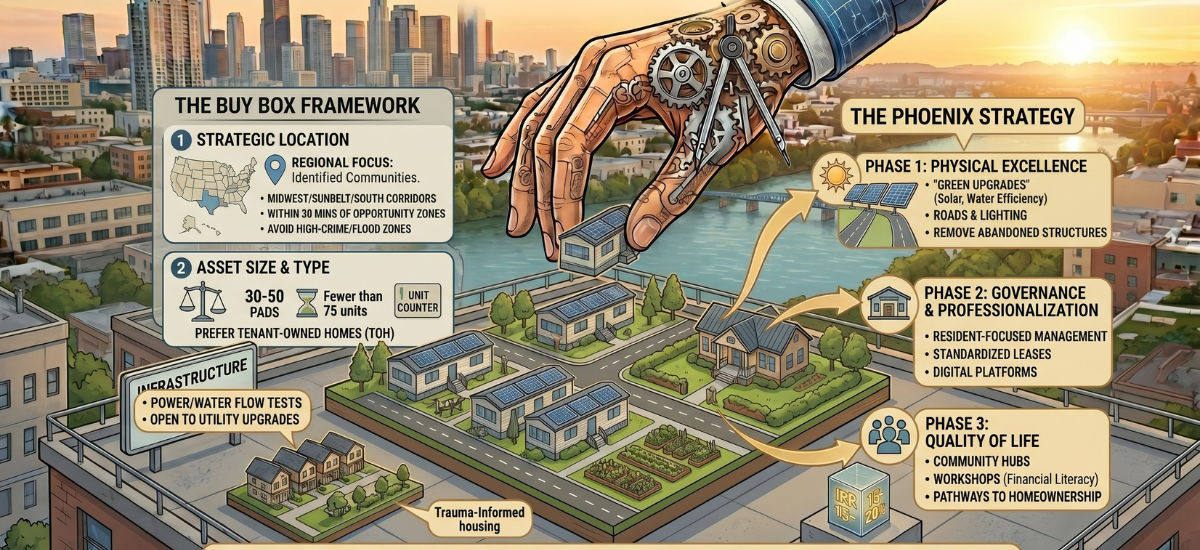
Before we break ground on improvements, our acquisitions team follows a rigorous site selection process to ensure every property meets our “gold standard” for stability and yield. Our investment standards prioritize established or underperforming parks where we can apply a value-add strategy to drive rent growth and operational excellence.
- Strategic Location: We target properties within 30 minutes of opportunity zones in the Midwest, Sunbelt, and South. We specifically avoid high-crime areas, declining markets, and flood zones to protect our partners’ capital.
- Asset Size and Type: Our sweet spot is typically 30–50 pads (targeting fewer than 75 units). While we prefer tenant-owned homes (TOH), we accept some park-owned homes (POH) if the fundamentals are strong.
- Infrastructure Potential: We are open to parks needing utility upgrades, provided we can verify the reliability of 3-phase power and water/sewer flow tests during due diligence.
The Phoenix Strategy: Transforming Neglect into Value
Once an asset is acquired, we execute our proprietary Phoenix Strategy—a three-phase framework designed to erase the signs of neglect and foster a genuine community.
Phase 1: Physical Excellence and “Green Upgrades”
The first step in any deal is an immediate commitment to physical restoration. This sends a clear message to residents that their home is valued. We implement “Green Upgrades”—such as solar integration and water efficiency systems—to reduce utility costs and increase the property’s Net Operating Income (NOI). This phase includes repairing internal roads, installing modern LED street lighting, and removing abandoned structures to increase the safety and visual pride of the neighborhood. Durable upgrades, like replacing old carpets with luxury vinyl plank flooring in park-owned units, not only command higher rents but also ensure the asset’s longevity.
Phase 2: Governance and Professionalization
Physical beauty must be matched by operational integrity. We replace hostile or absentee management with resident-focused professionals who operate under a strict code of ethics. Transparency is key; we standardize lease agreements to eliminate predatory fees and integrate modern digital platforms for rent payments and maintenance requests. By professionalizing the “trailer park” model into a branded workforce community, we create “communities of choice” for local workers, leading to stabilized occupancy rates of 92-95%.
Phase 3: Enhancing Quality of Life
The final component of a high-potential deal is the sustainability of the residents’ quality of life. We dedicate space for community hubs—centers that host financial literacy workshops, after-school tutoring, and health clinics. Our goal is to move beyond providing shelter to creating a platform for social mobility, including pathways to homeownership where residents can eventually own the land beneath them.
A Unified Approach to Housing and Hope
By identifying underutilized assets and applying our value-add infrastructure plan, TerraNova Alliance generates strong risk-adjusted returns (with a projected IRR of 15-20%) while simultaneously solving the housing crisis. Every community we revitalize serves as a building block for our broader mission: using profitable workforce housing to eventually fund “Safe Haven” sanctuaries for at-risk youth and survivors of human trafficking. We don’t just buy properties; we revitalize the corridors that power the nation.