Analyzing the Workforce Housing Thesis
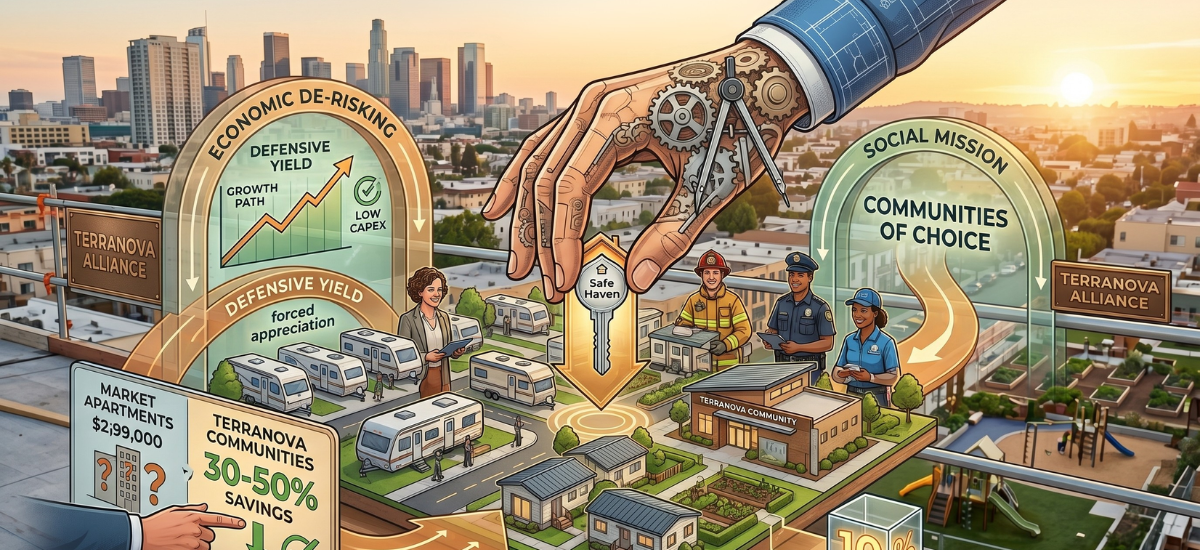
In the current economic climate, investors are increasingly searching for “defensive yield”—assets that remain stable during market volatility while providing a clear path for growth. At TerraNova Alliance, we believe the answer lies in the “missing middle.” Our workforce housing thesis, centered on RV parks and Manufactured Home Communities (MHCs), represents more than just a real estate play; it is a strategic approach to de-risking your portfolio while fueling a profound social mission.
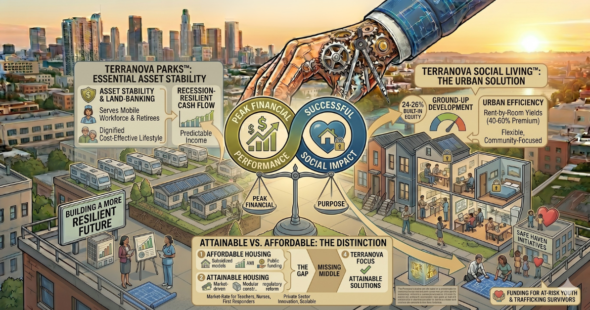
The workforce housing sector targets a specific market gap: individuals who earn too much for government subsidies but too little for market-rate apartments. This includes the teachers, first responders, and service workers who keep our cities running. By professionalizing and branding these often-stigmatized assets, TerraNova Alliance creates “communities of choice” that offer 30-50% savings compared to local apartment rents.
The Stability of Recession-Resilience
Why are RV parks and MHCs considered recession-resilient? The answer is found in the “land-lease” model. In these communities, residents often own their homes but lease the land. This structure leads to exceptionally low turnover. Moving a manufactured home is a costly and complex endeavor, which incentivizes long-term residency. During economic downturns, demand for attainable housing actually increases as households “trade down” from expensive multifamily units to more affordable options, keeping occupancy rates high—often exceeding 95% in target corridors.
Predictable Cash Flow and Value-Add Growth
For our partners, the attraction to workforce housing is the predictable cash flow. Unlike traditional apartments with high maintenance overhead, the land-lease model shifts many responsibilities to the homeowner, resulting in lower operating expenses (OPEX), typically between 35-45%. This efficiency allows for durable, monthly rental income and a stable Net Operating Income (NOI).
Furthermore, we employ a “Phoenix Strategy™,” where we acquire underutilized or under-managed properties and revitalize them. Through “Green Upgrades”—such as solar integration and water efficiency—we reduce costs and increase NOI, driving significant value-add growth. For example, a strategic acquisition like the McCamey RV Park portfolio demonstrates this potential, with projected Cap Rate growth from 9.59% to over 16% through disciplined management.
The “Flywheel” Effect: Funding the Safe Haven Mission
What truly distinguishes TerraNova Alliance is our “Unified Approach to Housing and Hope.” We don’t just move capital; we use it to build a bridge to social impact. Our workforce housing assets serve as the “Economic Engine” (Phase I), building the capital reserves and institutional trust necessary to launch our “Safe Haven” communities (Phase II) in Year 4.
These Safe Haven communities provide specialized, trauma-informed housing for at-risk youth and survivors of human trafficking. The profits generated from workforce housing fund the infrastructure and security required for these sanctuaries. This creates a “Flywheel Effect”: profitable real estate generates the resources for social impact, which in turn drives brand equity and opens doors to low-cost, mission-driven capital, allowing us to scale further.
Conclusion: Aligning Profit with Purpose
Investing in the TerraNova Alliance workforce housing thesis offers the best of both worlds: a recession-resistant asset class with high-density yield and a mission-driven focus that restores dignity to those in need. By grounding capital in real land and essential housing, we aren’t just securing returns; we are building a national network of hope.
Ready to join the movement? Explore our current opportunities and see how we are redefining the narrative around affordable housing.